

15 Climate Action Tips That Actually Reduce Your Carbon Footprint
You know climate change is real. You want to help. But generic advice feels useless. You need specific actions that create measurable impact.
These 15 climate action tips reduce your carbon footprint by 30 to 50 percent. Each tip includes the exact emissions savings you achieve.
Why Individual Climate Action Matters
Your personal carbon footprint is 15 to 16 tons of CO₂e per year if you live in the United States. The sustainable global target is 2 to 3 tons per year.
You need to cut your emissions by 70 to 80 percent. This feels impossible. But you focus on high-impact actions first.
Individual action also drives systemic change. When millions reduce meat consumption, food companies respond. When thousands buy electric vehicles, automakers invest in EV production. Your choices signal market demand.
Calculate your baseline footprint with the OpinoHive Carbon Footprint Calculator before starting. You measure your starting point. You track progress over time.
Learn more about understanding how calculators work.
Transportation Climate Actions
Transportation creates 29 percent of US greenhouse gas emissions, according to EPA vehicle emissions data. Your vehicle choices have a massive impact.
Understand seasonal variations in emissions throughout the year.
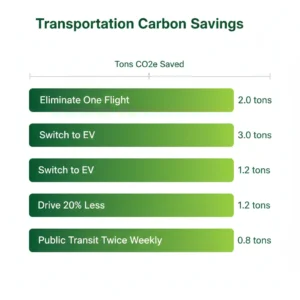
TIP 1: Eliminate One Round-Trip Flight Per Year
Savings: 1.5 to 3.0 tons CO₂e annually
A round-trip flight from New York to London produces 1.6 tons of CO2e per passenger. Los Angeles to Tokyo produces 3.0 tons. Domestic flights produce 0.4 to 0.8 tons per round trip.
Skip one flight. Use video conferencing for work meetings. Choose driving distance vacations. Take trains for trips under 500 miles.
TIP 2: Drive 20 Percent Less
Savings: 1.0 to 1.5 tons CO₂e annually
The average American drives 13,500 miles per year. Reducing this to 10,800 miles saves 1.2 tons of CO2e.
Combine errands into single trips. Work from home two days per week. Carpool with coworkers. Walk or bike for trips under 2 miles.
TIP 3: Switch to an Electric Vehicle
Savings: 2.0 to 4.0 tons CO₂e annually
Gasoline vehicles produce 4.6 tons of CO₂e per year. Electric vehicles produce 1.5 tons when charged from average US grid electricity. This saves 3.1 tons annually.
Used EVs cost less than new gasoline cars. Federal tax credits reduce new EV prices by $7,500. Charging costs 60 percent less than gasoline.
TIP 4: Use Public Transportation Twice Per Week
Savings: 0.8 tons CO₂e annually
Buses produce 33 percent fewer emissions per passenger mile than cars. Trains produce 73 percent less.
Replace your commute with public transit two days weekly. This saves 0.8 tons per year. You also save on parking costs and vehicle maintenance.
Check your local transportation emissions with the Transportation Carbon Footprint Calculator.
Home Energy Climate Actions
Home energy creates 20 percent of US emissions. Learn how small changes compound into major savings through the Department of Energy’s efficiency guidelines.
TIP 5: Switch to 100 Percent Renewable Energy
Savings: 2.5 to 3.5 tons CO₂e annually
Most utilities offer renewable energy plans. You pay 1 to 3 cents more per kilowatt hour. The average home uses 10,500 kilowatt-hours yearly.
Switching eliminates 3.0 tons of emissions. This costs an extra $10 to $30 monthly. The impact equals eliminating one car.
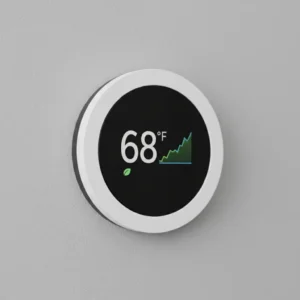
TIP 6: Install a Smart Thermostat
Savings: 0.5 to 0.8 tons CO₂e annually
Smart thermostats reduce heating and cooling by 10 to 15 percent. They learn your schedule. They adjust temperatures automatically.
Lower your thermostat 2 degrees in winter. Raise it 2 degrees in summer. This simple change saves 0.6 tons annually.
TIP 7: Replace Incandescent Bulbs with LEDs
Savings: 0.3 tons CO₂e annually
LED bulbs use 75 percent less energy than incandescent bulbs. They last 25 times longer.
Replace your 20 most-used bulbs. This saves 0.3 tons yearly and $75 in electricity costs.
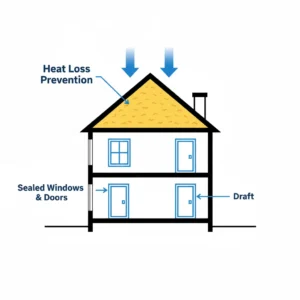
TIP 8: Air Seal Your Home
Savings: 0.8 to 1.2 tons CO₂e annually
Air leaks waste 25 to 40 percent of heating and cooling energy. Seal gaps around windows, doors, and outlets.
Professional air sealing costs $300 to $600. You save $200 yearly on energy bills. Emissions drop by 1.0 ton.
TIP 9: Install Attic Insulation
Savings: 1.0 to 1.5 tons CO₂e annually
Proper attic insulation reduces heating and cooling needs by 30 percent. Most homes have insufficient insulation.
Adding insulation costs $1,500 to $2,500. You save $300 yearly on energy. The payback period is 5 to 8 years. Emissions decrease by 1.2 tons.
Learn more strategies to cut home energy emissions by 70 percent.
Food and Diet Climate Actions
Food production creates 10 to 15 percent of household emissions. Your diet choices matter significantly.
TIP 10: Reduce Red Meat to Once Weekly
Savings: 0.8 to 1.2 tons CO₂e annually
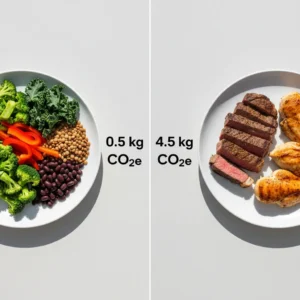
Beef produces 27 kg CO₂e per kilogram. Pork produces 12 kg. Chicken produces 6 kg. Beans produce 0.4 kg.
The average American eats 25 kg of beef yearly. Cutting this to 5 kg saves 540 kg of emissions. Replacing beef with chicken saves another 400 kg.
TIP 11: Eat Plant-Based Three Days Per Week
Savings: 0.5 to 0.8 tons CO₂e annually
Plant-based meals produce 75 percent fewer emissions than meat meals. Three meatless days weekly cuts food emissions by 40 percent.
You save money too. Beans and lentils cost 80 percent less than beef per gram of protein.
TIP 12: Reduce Food Waste by 50 Percent
Savings: 0.3 to 0.5 tons CO₂e annually
Americans waste 30 to 40 percent of food. Wasted food in landfills produces methane.
Plan meals weekly. Store food properly. Eat leftovers. Compost scraps. Halving waste saves 0.4 tons yearly.
TIP 13: Buy Local Seasonal Produce
Savings: 0.2 to 0.3 tons CO₂e annually
Transportation adds emissions to food. Asparagus from Peru produces 3 times more emissions than local asparagus.
Shop farmers’ markets. Choose seasonal produce. Buy regional items. This reduces food transportation emissions by 30 percent.
Calculate your food carbon footprint to identify your biggest opportunities.
Consumption Climate Actions
Manufacturing and shipping goods create hidden emissions. Buying less has a huge impact.
TIP 14: Buy 50 Percent Less New Clothing
Savings: 0.3 to 0.5 tons CO₂e annually
Producing one cotton t-shirt creates 7 kg CO₂e. One pair of jeans creates 33 kg. Americans buy 60 new clothing items yearly.
Buy secondhand. Repair existing clothes. Choose quality over quantity. Cutting purchases in half saves 0.4 tons.

TIP 15: Extend Device Lifespan by 2 Years
Savings: 0.2 to 0.4 tons CO₂e annually
Manufacturing a smartphone produces 75 kg CO₂e. A laptop produces 200 kg. Americans replace phones every 2 years and laptops every 3 years.
Repair broken devices. Update software. Replace batteries. Using devices for 2 years longer reduces manufacturing emissions by 40 percent.
Advocacy and Systemic Climate Actions
Personal reduction is essential. Systemic change is critical.
Could you please contact your elected representatives monthly about climate legislation? Support carbon pricing. Demand renewable energy standards. Vote for climate-focused candidates.
Pressure the companies you buy from. Ask about their carbon reduction plans. Choose companies with science-based targets.
Divest from fossil fuels. Move retirement accounts to sustainable funds. Your investment dollars fund future emissions.
Join local climate organizations. Collective action amplifies individual efforts. Community solar projects. Local transit advocacy. Municipal renewable energy goals.
Your voice, combined with thousands, creates policy change. Ask companies about their corporate carbon reduction plans.
Measuring Your Impact
Track your carbon footprint every 6 months. Use the same calculator each time. Watch your numbers decrease.
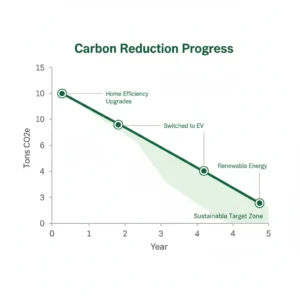
Most people reduce their footprint by 20 to 30 percent in year one by implementing 5 to 7 of these tips. Year two brings another 15 to 20 percent reduction.
You reach the 2- to 3-ton sustainable target in 3 to 5 years with consistent action.
Start Today
Choose three tips from this list. Implement them this month. Add three more next quarter.
High-impact actions first. Transportation and home energy create 70 percent of your footprint. Start there.
Pick your actions. Track your progress. You create real climate impact through measured, consistent effort.