

Networking Tips for Introverts 2026 | Build Connections Authentically
Elena dreaded networking events. The thought of walking into a room full of strangers, making small talk, and selling herself made her physically anxious.
She avoided industry conferences. She skipped after-work mixers. She turned down coffee invitations. Her network stayed small.
When she needed a new job after a company layoff, Elena had almost no professional contacts to reach out to. Her applications went into black holes. She felt isolated and stuck.
Everything changed when she discovered networking strategies designed for introverts. One-on-one coffee chats replaced large events. LinkedIn messages substituted for cold calls. Genuine conversations replaced forced schmoozing.
Within 3 months, Elena built 40 meaningful professional connections. Three of those connections led to job opportunities. She accepted a role at a company that never posted the position publicly. Elena combined networking with an optimized LinkedIn presence to maximize visibility.
Networking does not require being extroverted. It requires being strategic and authentic. Introverts often build stronger professional relationships than extroverts because they focus on depth over breadth.
This guide shows you how to network effectively as an introvert without exhausting yourself or being fake.

Understanding Introvert Networking Challenges
Introverts face specific obstacles in traditional networking environments.
Energy Management
Introverts recharge through alone time. Social interaction drains energy, especially in large groups and superficial conversations.
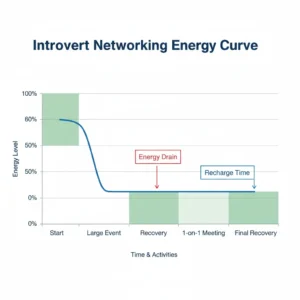
A networking event with 100 people feels overwhelming. Maintaining energy for 2 hours of continuous socializing requires significant effort. The exhaustion lasts for days afterward.
This does not mean introverts lack social skills. It means they process social interaction differently. They prefer meaningful conversations over small talk. They connect deeply with a few people rather than superficially with many.
Understanding your energy limits lets you network sustainably. You build connections without burning out.
Quality Over Quantity
Extroverts often collect hundreds of business cards. Introverts build fewer but stronger relationships.
Quality beats quantity for career advancement. Ten people who know your work well and will refer you actively outperform 100 loose acquaintances who barely remember meeting you.
Introverts naturally gravitate toward deeper connections. This strength gets overshadowed by pressure to match extroverted networking styles.
Your goal is not to match extrovert behavior. Your goal is to leverage your natural strengths to build genuine professional relationships.
Redefining Networking for Introverts
Effective networking looks different for introverts.
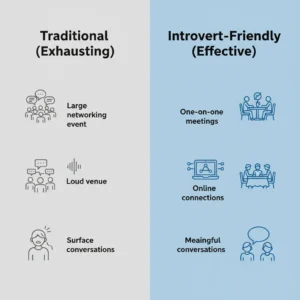
Leverage Your Strengths
Introverts excel at listening. Use this in networking conversations. Ask thoughtful questions. Pay attention to answers. Remember the details people share.
People love talking about themselves and their work. Your attentive listening makes conversations enjoyable for others. They remember you positively.
Introverts also excel at written communication. Thoughtful emails and LinkedIn messages feel more comfortable than spontaneous conversations. Lean into this strength.
Your follow-up messages after meeting someone stand out because you reference specific conversation details. Extroverts often fail at follow-through. Your careful follow-up becomes your competitive advantage.
Introverts think before speaking. In networking contexts, this means you contribute meaningful insights rather than filling silence with chatter. Quality contributions make stronger impressions than constant talking.
One-on-One Connections
Skip the 200-person mixer. Request one-on-one coffee meetings instead.
One-on-one conversations let you connect genuinely. You ask deeper questions. You share more authentically. You build real relationships.
These meetings feel less draining because you control the environment. You choose quiet coffee shops over loud venues. You set time limits that preserve your energy.
One focused conversation creates more career value than 20 superficial exchanges at a networking event.
Target 2 to 4 one-on-one meetings monthly. This sustainable pace builds your network steadily without overwhelming you.
Online Networking Strategies
Digital networking plays to introvert strengths.
LinkedIn Engagement
LinkedIn lets you network asynchronously from home. No forced small talk. No energy-draining crowds.
Effective LinkedIn networking includes commenting thoughtfully on connections’ posts, sharing valuable articles with brief insights, publishing your own posts on professional topics, sending personalized connection requests, and messaging contacts with specific questions or offers of help.
Daily LinkedIn routine for introverts: spend 15 minutes reading your feed. Comment meaningfully on 2 to 3 posts. Like 5 to 10 posts. Send 1 to 2 personalized messages.
This 15-minute investment builds visibility and relationships without draining energy.
When commenting, add value. Share a related experience. Ask a thoughtful question. Offer a different perspective. Avoid generic comments like “Great post” that add nothing.
Write posts about lessons learned, industry insights, or professional challenges you solved. These establish expertise and attract like-minded professionals. Earn respected certifications to give you credibility and conversation topics for networking. You should create a portfolio website to give networking contacts tangible proof of your abilities.
Professional Communities
Join online communities where your target professional contacts gather.
Slack groups, Discord servers, and specialized forums let you participate at your own pace. You read discussions. You contribute when you have valuable input. You connect privately with members who share your interests.
Online communities feel less pressuring than in-person events. You control when and how much you engage.
Find communities through industry associations, professional groups on LinkedIn, subreddits related to your field, and American Marketing Association, Slack or Discord groups for your profession.
Participate regularly but at your comfortable pace. Quality contributions matter more than constant presence.
Email Outreach
Email lets you craft thoughtful messages. You revise until your words express exactly what you want to say. No pressure to think on your feet.
Effective outreach emails include a specific reason for reaching out, a genuine compliment or point of connection, brief relevant information about yourself, a clear but low-pressure request, and an easy way to say yes or no.
Template:
Subject: Question about your work in the field.
Hi Name, I came across your article on the topic and found your perspective on a specific point particularly insightful. I am working in a related area and would love to learn from your experience. Would you be open to a 20-minute phone call or coffee chat in the next few weeks? I am happy to work around your schedule. No pressure if your schedule is too full.
Best, Your Name.
This approach respects their time while expressing genuine interest. Most people respond positively to thoughtful requests.
In-Person Networking Without Exhaustion
When you do attend in-person events, use strategies that preserve energy.
Here’s how networking activities affect introvert energy levels:
Choose Smaller Events
Skip massive conferences. Attend workshops, seminars, or small group dinners instead.
Events with 10 to 30 people feel manageable. You have substantive conversations rather than brief exchanges. You remember people you meet.
Look for professional development workshops, industry-specific meetups, company-sponsored events, alumni gatherings, and volunteer opportunities in your field.
These events attract people interested in learning and connecting meaningfully, not just collecting contacts.
Prepare Conversation Starters
Reduce social anxiety by preparing topics in advance.
Safe conversation starters include “What brings you to this event,” “What projects are you working on currently,” “How did you get started in this field,” “What challenges are you facing in your work right now,” and “What professional development are you focused on.”
These open-ended questions let others talk while you listen. Most people enjoy discussing their work.
Prepare a brief introduction of yourself. 2 to 3 sentences explaining what you do and what you are interested in. Practice until it feels natural.
Having prepared material reduces cognitive load during conversations. You focus on listening rather than scrambling for what to say.
Set Time Limits
Attend events for 60 to 90 minutes instead of the full duration. Quality time beats exhausting yourself by staying too long.
Permit yourself to leave when your energy depletes. Forcing yourself to stay when drained leads to negative associations with networking.
Schedule recovery time after networking events. Block your calendar the evening after an event for quiet recharge time.
Building Relationships Gradually
Networking is relationship building, not transactional contact collecting.
Follow-Up Strategies
Follow up within 24 to 48 hours after meeting someone.
Send a brief email or LinkedIn message referencing your conversation. Mention something specific you discussed. Express interest in staying connected.
Template:
Hi Name, Great meeting you at the event yesterday. I enjoyed hearing about your work on a specific project. Your approach to the specific challenge gave me a new perspective on my own work. I would love to stay in touch.
Feel free to connect with me on LinkedIn.
Best, Your Name.
This shows you paid attention during the conversation. It transforms a chance meeting into the start of a relationship.
Nurturing Connections
Stay in touch without being pushy or needy.
Share relevant articles or resources with your contacts. “Saw this and thought of you” messages show you remember their interests.
Congratulate connections on promotions, new roles, or accomplishments you see on LinkedIn.
Offer help when you can. Make introductions. Share opportunities. Provide information they might find useful.
Reciprocity builds relationships. If you only reach out when you need something, you are not networking. You are using people.
Touch base every 3 to 6 months with valuable contacts. A brief message maintaining the relationship prevents you from becoming a stranger.
Networking Events for Introverts
Some event types suit introverts better than others.
Professional Workshops
Workshops and training sessions provide natural conversation topics. Everyone shares an interest in the workshop subject.
You connect over shared learning. Conversations feel purposeful rather than forced.
Look for workshops in your field. Attend regularly. You see familiar faces and build relationships over time. Use platforms like Harvard Business Review on Networking.etc.
Coffee Chats
Request or accept invitations for one-on-one coffee meetings.
These feel manageable and create genuine connections. You control the setting and duration.
Target 2 to 4 coffee chats monthly. Alternate between reaching out and responding to others’ requests.
Come prepared with questions. Show genuine interest in the other person. Share authentically about your own work.
Industry Meetups
Small industry meetups of 15 to 25 people balance social interaction with manageability.
Look for groups on Meetup.com related to your profession. Attend the same meetup regularly. Familiarity reduces anxiety.
Early in the meeting, introduce yourself to 2 to 3 people individually. This feels better than trying to break into established conversation groups.
Build networking into your 30-day job search plan for structured progress. Pair your networking efforts with strategic career courses to offer value to your connections.
What Not to Do
Avoid these common networking mistakes.
Do not force yourself to match extroverted networking styles. You will exhaust yourself and feel inauthentic.
Do not attend every networking event you hear about. Selectivity preserves energy and lets you be present at events you do attend.
Do not collect contacts without nurturing relationships. 500 LinkedIn connections mean nothing if no one remembers you.
Do not only reach out when you need something. Build relationships continuously, not just during job searches.
Do not apologize for being introverted. Your thoughtful, genuine approach to relationships is a strength, not a weakness.
Do not network drunk at happy hours, thinking alcohol makes it easier. This creates poor impressions and regrettable interactions.
Do not avoid networking entirely. Your career needs professional relationships. Find approaches that work for your personality.
Managing Networking Anxiety
Many introverts experience anxiety about networking. Strategies help manage this.
Start small. If networking events feel overwhelming, begin with one-on-one coffee chats. Build confidence before tackling larger events.
Set specific, achievable goals. “Talk to 3 new people” feels more manageable than vague pressure to “network well.”
Remind yourself that most people feel networking anxiety. You are not alone in finding it uncomfortable.
Focus on others instead of yourself. When you concentrate on learning about them and their work, self-consciousness decreases.
Practice self-compassion. Some networking attempts will feel awkward. That’s normal. Learn and adjust rather than criticizing yourself.
Celebrate small wins. Sent 2 LinkedIn messages this week. Success. Had one coffee chat. Progress. Your network grows through consistent small actions.
This will also help you to understand Introversion “Psychology Today on Introversion.“
Your Introvert-Friendly Networking Plan
Follow this sustainable approach to build professional connections.
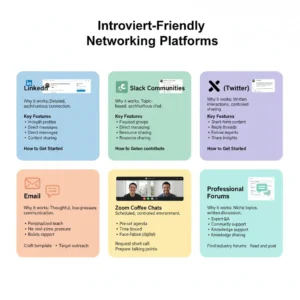
These platforms work especially well for introverted professionals:
Month 1 Digital Foundation: Optimize your LinkedIn profile. Join 3 online professional communities. Spend 15 minutes daily on LinkedIn engagement. Send 5 personalized connection requests.
Month 2 One-on-One Outreach: Request 3 coffee chats with people in your field. Attend 1 small professional workshop. Follow up with everyone you meet within 48 hours. Continue daily LinkedIn engagement.
Month 3 Relationship Building: Have 3 more one-on-one meetings. Attend 1 to 2 small events. Share valuable content with 5 connections. Check in with 5 existing contacts. Maintain a daily LinkedIn routine.
Repeat the month 3 pattern ongoing. This builds a strong network through approaches that suit your introverted nature.
Track your networking activities and results. You will see relationships forming and opportunities arising from consistent effort.
Frequently Asked Questions (FAQs)
Q: Do I need to attend networking events if I am introverted?
Not large mixers. Focus on smaller events, one-on-one meetings, and online networking. Build your network through channels that feel comfortable and authentic.
Q: How do I overcome networking anxiety?
Start with low-pressure situations like online engagement and coffee chats with one person. Set small achievable goals. Remember, most people also feel anxious about networking.
Q: What if I have nothing interesting to say?
Ask questions and listen. People remember great listeners more than great talkers. Your thoughtful questions and genuine interest make you memorable.
Q: How many networking events should I attend?
Quality beats quantity. Attend 1 to 2 small events monthly, plus 2 to 4 one-on-one meetings. This builds your network without overwhelming you.
Q: Should I push myself to be more outgoing?
No. Be authentically yourself. Genuine, thoughtful relationship building beats fake extroversion. Your introversion is not a flaw to fix.
Q: How do I follow up without seeming pushy?
Send one follow-up message within 48 hours referencing your conversation. Then nurture the relationship gradually by sharing relevant content every few months. Do not constantly message or always ask for favors.
Networking as an introvert means playing to your strengths. Deep listening. Thoughtful communication. Genuine relationship building. These create stronger professional connections than superficial contact collecting.
Stop trying to network like an extrovert. Start networking like yourself. Build connections authentically at a sustainable pace.
Your next career opportunity will likely come from your network. Build that network in ways that energize rather than drain you.
For more career strategies, explore our LinkedIn optimization guide, job search tactics, and professional development resources.