

Job Board Strategies 2026 | Find Jobs Faster and Smarter
You applied to 127 jobs over 3 months using the spray-and-pray method. You submitted generic resumes to every posting that seemed remotely relevant. You received 4 responses and zero interviews.
I think your approach was backwards. You focused on quantity over quality. You treated all job boards the same. You never followed up.
But after adopting a strategic approach with targeted applications on the right platforms, customized materials, and systematic follow-up, you will definitely receive interview requests in four weeks. Your ATS-optimized resume helped you to pass the initial screening filters.
Job boards are tools, not magic solutions. Success comes from using them strategically, not desperately. The average job seeker applies to 27 positions before landing an interview, according to Jobvite research. Strategic job seekers cut that number to 12 to 15 through better targeting and execution.
This guide shows you which job board strategies work best, how to set up efficient search systems, and tactics that transform job boards from time sinks into opportunity engines.

Table of Contents
The Reality of Job Boards
Job boards serve as marketplaces connecting employers and candidates. Understanding how they work helps you use them effectively.
Job Board Statistics
70 percent of job seekers use job boards as their primary search method, yet only 20 percent of jobs get filled through job board applications, based on LinkedIn and Indeed data.
This disconnect creates frustration. You apply to dozens of positions with minimal response. The math explains why. If 200 people apply for one role through a job board, 199 get rejected.
Success rates vary dramatically by approach. Generic applications to popular postings yield 2 to 5 percent interview rates. Targeted applications to newer postings with customized materials generate 15 to 25 percent interview rates.
The difference is strategy.
Why Generic Applications Fail
Most job seekers make the same mistakes.
They apply within minutes of seeing a posting without researching the company. They use identical resumes for every application. They ignore keywords in job descriptions. They apply to jobs for which they are underqualified or overqualified. They never follow up after applying.
These applications blend into hundreds of similar submissions. Nothing makes them stand out. Hiring managers skip them.
Strategic applications require more time per posting but generate far better results. Ten well-targeted applications outperform 100 generic ones.
Best Job Boards by Category
Different job boards serve different purposes and audiences. Use the right platform for your needs.
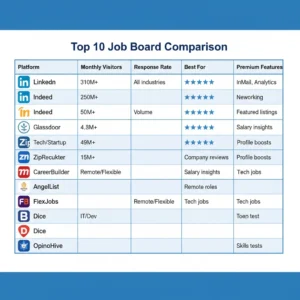
General Job Boards
LinkedIn Jobs: Largest professional network with 58 million company pages and millions of job listings. Strengths include company research integration, easy application with LinkedIn profile, and recruiter visibility through profile optimization. Weaknesses include high competition for popular postings, and many listings are cross-posted from other sites. Best for: White-collar professionals, networking while job searching, and researching companies.
Indeed: Most visited job site with over 250 million visitors monthly. Strengths include comprehensive job aggregation from multiple sources, salary comparison tools, and company reviews. Weaknesses include duplicate listings and varying application quality. Best for: Broad job searches, salary research, and entry to mid-level positions.
Glassdoor: Combines job listings with company reviews and salary data. Strengths include transparent company culture information, interview experience insights, and salary transparency. Weaknesses include a smaller job inventory than on Indeed or LinkedIn. Best for: Company research before applying and evaluating company culture fit.
ZipRecruiter: AI-powered matching between candidates and jobs. Strengths include one-click applications, job matching alerts, and broad distribution to multiple sites. Weaknesses include aggressive email notifications and some lower-quality listings. Best for: Casting a wide net efficiently and passive job searching.
Monster and CareerBuilder: Older platforms with declining market share. Still hosts legitimate jobs. Best for: Supplementing searches on primary platforms.
Industry-Specific Boards
AngelList (Wellfound): Startup jobs in tech. Best for: Engineers, designers, product managers, and others interested in startup culture.
Dice: Technology and IT jobs. Best for: Software engineers, IT professionals, tech specialists.
Idealist: Nonprofit and social impact jobs. Best for: Those seeking mission-driven work and nonprofit careers.
Mediabistro: Media, marketing, and creative jobs. Best for: Journalists, content creators, marketing professionals.
eFinancialCareers: Finance industry jobs. Best for: Investment banking, trading, and financial analysis roles.
Behance and Dribbble: Design communities with some job listings. Best for: Designers showcasing portfolios.
GitHub Jobs: Developer roles posted by tech companies. Best for: Software engineers and developers.
Remote Work Job Boards
FlexJobs: Vetted remote and flexible jobs, subscription required. Cost is $14.95 per month. Best for: Remote workers avoiding scams and legitimate flexible arrangements.
Remote.co: Curated remote positions. Free. Best for: Remote workers and digital nomads.
We Work Remotely: Remote jobs in tech, marketing, and customer support. Best for: Remote work in tech fields.
Working Nomads: Daily curated remote jobs. Best for: Digital nomads and remote professionals.
Startup and Tech Job Boards
AngelList: Detailed startup profiles with job listings. Best for: Those wanting equity compensation and startup environments.
Crunchbase: Startup database with some job listings. Best for: Researching funded startups before applying.
Hacker News Who’s Hiring: Monthly hiring thread on Hacker News. Best for: Developers and tech professionals comfortable with text-based listings.
Stack Overflow Jobs: Developer jobs with company culture details. Best for: Software engineers who participate in the Stack Overflow community.
Government and Nonprofit Boards
USAJobs.gov: Federal government positions. Best for: Those seeking government careers and federal benefits.
GoGovernment: State and local government jobs. Best for: Public sector employment.
Idealist: Nonprofit and social impact roles. Best for: Mission-driven professionals.
Setting Up Your Job Search System
Organize your job search like a project with clear systems and processes.
Create Job Alerts
Set up alerts on 3 to 5 platforms to receive new listings matching your criteria.
LinkedIn: Create job alerts for specific titles, companies, and locations. Set the frequency to daily for active searches.
Indeed: Set up email alerts for saved searches. Use specific keywords and location filters.
Glassdoor: Alert for companies you are interested in and job titles.
Industry boards: Set alerts on 1 to 2 specialized boards for your field.
Configure alerts to avoid overwhelm. Daily digests work better than real-time notifications. Review alerts at set times rather than reacting throughout the day.
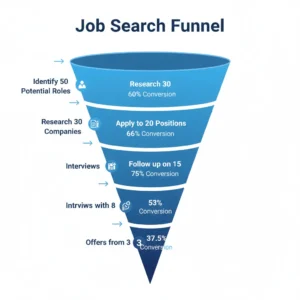
Your job search should follow this strategic funnel:
Optimize Your Profiles
Before applying through job boards, optimize your profiles on those platforms.
LinkedIn: Complete your LinkedIn profile following our optimization guide for maximum recruiter visibility.
Indeed and Glassdoor: Create comprehensive profiles. Upload resume. Add skills and work history. Complete profiles rank higher in recruiter searches.
ZipRecruiter: Build a detailed profile. The platform’s matching algorithm uses this to suggest relevant jobs.
Well-optimized profiles attract recruiter outreach in addition to your active applications.
Track Your Applications
Use a spreadsheet or tool to track every application.
Use this tracking template for every application:
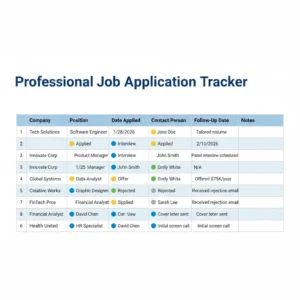
Essential tracking fields include company name, position title, application date, job board used, contact person if known, application status, follow-up dates, interview dates, and notes.
This prevents duplicate applications, enables systematic follow-up, and helps analyze which approaches work best.
Tools like Huntr, JibberJobber, or a simple Google Sheet work well. Update immediately after each application.
Writing Applications That Stand Out
Quality applications require customization for each position.
Customize Every Resume
Tailor your resume for each job by adjusting keywords to match the job description, reordering skills to highlight the most relevant ones, emphasizing experiences most applicable to the role, and quantifying achievements that demonstrate required capabilities. Strengthen your candidacy by completing relevant professional courses before applying.
This takes 15 to 30 minutes per application. That investment increases your interview rate dramatically.
Use job description keywords in your resume. If they say cross-functional team leadership, use that exact phrase. Apply ATS-friendly formatting to ensure your customized resume passes screening software.
Write Targeted Cover Letters
Cover letters matter when done well. Generic cover letters waste time. Skip them or write targeted ones.
An effective cover letter structure includes an opening paragraph explaining why you are interested in this specific role and company, a second paragraph highlighting 2 to 3 relevant achievements that match job requirements, a third paragraph showing you researched the company and understand their challenges, and a closing with a clear call to action.
Keep it to 250 to 350 words. Make every sentence count.
Reference specific details from the company’s website, recent news, or job description. This shows genuine interest rather than mass applications.
Follow-Up Strategy
Most job seekers never follow up. This gives you an advantage.
Wait 7 to 10 days after applying. Send a brief follow-up email to the hiring manager or recruiter if you found their contact information.
Template: Subject: Following up on Operations Manager application. Hi Name, I applied for the Operations Manager position on March 15 and wanted to express my continued interest. My 6 years of managing supply chain operations and reducing costs by 18 percent align well with your needs. I would welcome the chance to discuss how I bring value to your team. I have attached my resume again for reference. Best, Your Name.
Keep it under 100 words. Reiterate interest. Add one specific qualification. Attach your resume again.
Follow up once. Do not pester with multiple emails.
Advanced Job Board Tactics
Go beyond basic searching with these strategic approaches.
Reverse Job Searching
Instead of searching job titles, search for companies you want to work for.
Make a list of 30 to 50 target companies. Check their career pages directly and job board listings weekly. Apply when relevant roles open, even if the timing is not perfect.
This proactive approach beats a reactive application to whatever appears in search results.
Using Boolean Search
Most job boards support Boolean operators for precise searches.
Use AND to require multiple terms. Example: project manager AND healthcare.
Use OR for alternative terms. Example: developer OR engineer OR programmer.
Use NOT to exclude terms. Example: marketing NOT internship.
Use quotes for exact phrases. Example: “data analyst”.
Combine operators for complex searches. Example: “product manager” AND (SaaS OR software) NOT internship.
Boolean searches filter noise and surface relevant positions that others miss.
Best Times to Apply
Timing affects your chances of being seen.
Apply within 24 to 48 hours of the job posting. Early applicants get more attention before hundreds of resumes pile up.
Submit applications Tuesday through Thursday mornings. Hiring managers review resumes midweek more than on Mondays or Fridays.
Avoid applying late Friday afternoon or on weekends. Your application sits until Monday and gets buried under weekend and Monday submissions.
Check job boards multiple times daily during active searches to catch new postings quickly.
Note: Include your portfolio website link in all job board applications.
Avoiding Job Board Scams
Not every job listing is legitimate. Watch for red flags.
Red Flags to Watch For
Job offers without interviews are scams. No legitimate employer hires without at least video interviews.
Requests for personal financial information before hiring. Never provide bank account numbers, social security numbers, or credit card information during an application process.
Vague job descriptions with unrealistic promises. “Make 10,000 dollars per week working from home 10 hours per week” is a scam.
Poor grammar and spelling in listings. Legitimate companies proofread job posts.
Email addresses from free providers like Gmail or Yahoo instead of company domains.
Requests to pay for training, equipment, or background checks. Real employers cover these costs.
Job titles that sound too good to be true for entry-level positions. “VP of Marketing, no experience required” does not exist.
How to Verify Legitimate Jobs
Research the company on Glassdoor, LinkedIn, and Google. Real companies have online presence.
Search for the company name plus scam or fraud. If others report issues, avoid.
Check if the company website matches the job posting details. Mismatches signal fake listings.
Look for the job on the company’s official career page. If it only exists on job boards, be suspicious.
Contact the company directly through their main number to verify the opening exists.
Trust your instincts. If something feels off, skip that application.
Beyond Job Boards
Job boards are one tool among many. Do not rely on them exclusively.
Company Career Pages
Many companies post openings on their career pages before or instead of job boards. Applying directly shows initiative and often faces less competition.
Visit the career pages of your target companies weekly. Set calendar reminders to check regularly.
Some companies accept general applications even without open roles. If you want to work somewhere specific, submit a strong application expressing interest.
Networking for Hidden Jobs
60 to 70 percent of jobs are filled through networking before they are ever posted, according to multiple studies.
Networking approaches include reaching out to former colleagues at target companies, connecting with employees on LinkedIn and requesting informational interviews, attending industry events and meetups, joining professional associations in your field, and participating actively in online communities related to your work.
One referral from an internal employee increases your interview chances by 400 percent compared to job board applications.
Use networking strategies designed for introverts to build genuine connections.
Measuring Your Job Search Success
Track metrics to improve your approach.
Monitor applications submitted weekly, response rate (responses divided by applications), interview rate (interviews divided by applications), and time from application to response.
If your response rate falls below 10 percent, your targeting or materials need improvement. Below 5 percent means major strategy changes are required.
If your interview rate is below 8 percent, customize your resumes more and apply to better-fit positions.
Adjust your approach based on data. If one job board generates better results, focus more energy there. If certain application times yield faster responses, apply during those windows.
Your 4-Week Job Board Strategy
Follow this 4-week plan for systematic job searching.
Week 1 Setup: Create accounts on 5 to 7 job boards. Optimize all profiles. Set up 10 to 15 job alerts. Create an application tracking system. Research 30 target companies. For a complete daily breakdown, follow our 30-day job search plan.
Week 2 Applications: Apply to 10 to 15 positions with fully customized materials. Research each company thoroughly. Write tailored cover letters. Track every application. Follow up on week 1 applications.
Week 3 Momentum: Continue 10 to 15 applications weekly. Expand to new job boards if needed. Schedule informational interviews with 3 to 5 network contacts. Update LinkedIn with new skills or projects.
Week 4 Optimization: Analyze which approaches generated responses. Double down on effective tactics. Adjust materials based on feedback. Follow up on outstanding applications. Continue 10 to 15 weekly applications.
Repeat weeks 2 through 4 until you land your role.
Frequently Asked Questions (FAQs)
Q: How many jobs should I apply to weekly?
Quality beats quantity. Apply to 10 to 15 well-researched positions weekly with customized materials rather than 50 generic applications. Strategic applications generate better results.
Q: Should I apply if I do not meet all requirements?
Yes, if you meet 60 to 70 percent of the requirements. Job descriptions often list wish lists rather than true requirements. Women, especially, should apply when meeting most qualifications.
Q: How long should I wait before following up?
Wait 7 to 10 days, then send one brief follow-up email. Do not follow up multiple times. Persistence crosses into pestering.
Q: Should I apply through the job board or the company website?
Apply through the company website when possible. Direct applications often integrate better with their applicant tracking systems. Use job boards for discovery, then apply directly.
Q: Is it worth paying for premium job board accounts?
LinkedIn Premium helps during active job searches. FlexJobs worthwhile for remote work seekers. Most other premium features provide marginal value. Try free versions first.
Q: How do I stand out when hundreds apply?
Apply within 48 hours of posting. Customize your resume and cover letter. Research the company thoroughly and reference specifics. Find and contact the hiring manager directly. Get a referral from an internal employee if possible.
Job boards work when you use them strategically. Set up systems. Target the right roles. Customize every application. Follow up consistently.
Stop applying to every job that sounds remotely interesting. Start applying strategically to positions you are genuinely qualified for and interested in.
Your next role comes from smart execution, not desperate volume. Quality beats quantity every time.
For more job search strategies, explore our resume optimization guide, LinkedIn profile tips, and complete career transition resources.