
Certifications Worth Getting 2026: Boost Your Career & Salary
Rachel worked as a financial analyst for 4 years. She possessed strong skills and consistently received solid performance reviews. Yet when she applied for senior roles, she was often outbid by candidates with professional certifications.
The difference was not experience. The difference was credentials that validated expertise.
Hiring managers saw Chartered Financial Analyst after competitor names. They saw proven commitment to professional development. Rachel had neither.
After earning her CFA Level 1 certification over 6 months of focused study, Rachel received 2 senior analyst offers within 8 weeks. Her new salary was 28 percent higher than her previous role.She updated her LinkedIn profile to prominently display her new credential.
Professionals with industry-recognized certifications earn 15 to 40 percent more than those without, according to the Global Knowledge IT Skills and Salary Report. Certifications signal expertise, commitment, and current knowledge.
This guide shows you which certifications deliver the best return on investment, how to choose the right credential for your field, and strategies for passing certification exams efficiently.

Table of Contents
Why Professional Certifications Matter
Certifications validate your skills through a third-party assessment. Unlike self-reported skills on resumes, certifications require passing rigorous exams or meeting specific experience requirements.
Employers trust certifications because they represent standardized knowledge and proven capability. Combine certifications with strategic courses for comprehensive skill development.
Salary Impact of Certifications
The financial returns from professional certifications are measurable and significant.
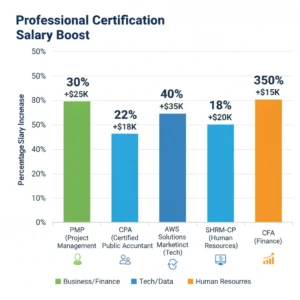
Technology certifications increase salaries by 15 to 35 percent on average. AWS Certified Solutions Architect holders earn 28 percent more than non-certified peers. Google Cloud certifications add 25 to 30 percent to base salary. CompTIA Security Plus increases cybersecurity salaries by 18 percent.
Business certifications show strong returns. Project Management Professional (PMP) holders earn 22 percent more on average. The Certified Public Accountant (CPA) designation increases accounting salaries by 20 to 25 percent. A Six Sigma Black Belt adds 15 to 20 percent to operations salaries.
Marketing and sales credentials provide competitive advantages. Salesforce certifications increase salaries 10 to 15 percent. HubSpot certifications, while free, improve job prospects significantly. Google Ads certifications help marketers command higher rates.
These increases compound over your career. A 20 percent salary boost at age 30 translates to hundreds of thousands in additional lifetime earnings.
Here’s how major certifications impact salaries across industries:
Career Advancement Benefits
Beyond salary, certifications accelerate promotion timelines.
63 percent of certified professionals receive promotions within 2 years of earning credentials, compared to 41 percent of non-certified professionals.
Certifications demonstrate initiative and learning ability. Managers view certified employees as more promotable because certifications prove a willingness to invest in professional growth.
Many senior roles list specific certifications as requirements or strong preferences. Without the credential, your application gets filtered out regardless of experience.
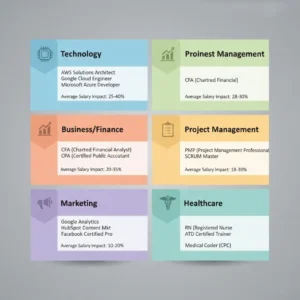
Certifications fall into these main categories by career path:
Technology Certifications
Tech certifications carry significant weight in hiring and salary negotiations.
Cloud Computing Certifications
Cloud skills are among the most in-demand technical abilities.
AWS Certified Solutions Architect Associate: Most valuable cloud certification. Validates ability to design distributed systems on AWS. Exam cost 150 dollars.
Preparation time: 40 to 80 hours. Average salary for holders: 130,000 to 150,000 dollars. Best for: Cloud architects, systems administrators, and developers working with AWS.
AWS Certified Developer Associate: Focuses on developing and maintaining AWS applications. Exam cost 150 dollars. Preparation time: 30 to 60 hours. Best for: Software developers, DevOps engineers.
Microsoft Azure Administrator or Solutions Architect: Growing rapidly as Azure adoption increases. Exam cost 165 dollars per exam. Preparation time: 50 to 100 hours. Best for: IT professionals in Microsoft-centric organizations.
Google Cloud Professional Cloud Architect: Validates Google Cloud expertise. Exam cost 200 dollars. Preparation time: 60 to 100 hours. Best for: Cloud architects preferring Google Cloud Platform.
Cybersecurity Certifications
Security skills command premium salaries across all tech sectors.
CompTIA Security Plus: Entry-level security certification recognized across industries. Exam cost 370 dollars. Preparation time: 40 to 60 hours. The average salary increase is 15 to 20 percent. Best for: IT professionals entering security, help desk staff advancing careers.
Certified Information Systems Security Professional (CISSP): Advanced security credential requiring 5 years of experience. Exam cost 749 dollars. Preparation time: 80 to 120 hours. Average salary for holders: 120,000 to 140,000 dollars. Best for: Security managers, consultants, and architects.
Certified Ethical Hacker (CEH): Offensive security skills certification. Exam cost 1,199 dollars, including training. Preparation time: 60 to 100 hours. Best for: Penetration testers, security analysts.
Certified Information Security Manager (CISM): Management-focused security certification. Exam cost 575 dollars. Preparation time: 60 to 100 hours. Best for: Security managers and directors.
Build certification study into your 30-day career advancement plan.
Data Science and Analytics Certifications
Data skills apply across all industries.
Google Data Analytics Professional Certificate: Beginner-friendly analytics credential through Coursera. Cost is 234 dollars for a 6-month completion. Preparation time: 10 hours per week for 6 months. Best for: Career changers entering analytics, business analysts formalizing skills.
Microsoft Certified Data Analyst Associate: Power BI and data analysis certification. Exam cost 165 dollars. Preparation time: 40 to 60 hours. Best for: Business intelligence professionals, data analysts.
Cloudera Certified Data Analyst: Big data analytics certification. Exam cost 295 dollars. Preparation time: 80 to 120 hours. Best for: Data engineers, big data professionals.
Software Development Certifications
Development certifications vary in industry recognition.
Microsoft Certified Azure Developer or Solutions Developer: Validates development skills on the Microsoft stack. Exam cost 165 dollars per exam. Best for: .NET developers, full-stack developers.
Oracle Certified Professional Java Programmer: Java development credential. Exam cost 245 dollars. Preparation time: 60 to 100 hours. Best for: Java developers, backend engineers.
Red Hat Certified System Administrator: Linux administration certification. Exam cost 400 dollars. Preparation time: 40 to 80 hours. Best for: System administrators, DevOps engineers.
Note: Many software development roles value portfolio and GitHub contributions more than certifications. Focus on building demonstrable skills alongside credentials.
Connect with other certified professionals using networking strategies that feel natural.
Business and Finance Certifications
Business certifications often serve as career requirements rather than optional credentials.
Project Management Certifications
Project Management Professional (PMP): Gold standard project management credential from the Project Management Institute. Requirements: 4,500 hours of project management experience, 35 contact hours of education. Exam cost 405 dollars for PMI members, 555 dollars for non-members.
Preparation time: 60 to 120 hours. Average salary for holders: 115,000 to 130,000 dollars. Salary increase of 20 to 25 percent. Best for: Project managers, program managers, and team leads managing projects.
Certified Associate in Project Management (CAPM): Entry-level PMI credential. Requirements: 23 contact hours of education or 1,500 hours of project experience. Exam cost 225 dollars for PMI members, 300 dollars for non-members. Preparation time: 30 to 60 hours. Best for: New project managers, team members moving into project coordination.
Certified ScrumMaster (CSM): Agile project management certification from Scrum Alliance. Requirements: Attend a 2-day course. Costs 1,000 to 1,400 dollars, including course and exam. Best for: Agile teams, software project managers, product owners.
Professional Scrum Master (PSM): Alternative Scrum certification from Scrum.org. No course requirement. Exam cost 150 dollars for PSM I. Preparation time is 20 to 40 hours of self-study. Best for: Budget-conscious professionals seeking Scrum credentials.
Accounting and Finance Certifications
Certified Public Accountant (CPA): Required for public accounting, highly valued in corporate finance. Requirements: 150 college credit hours, pass 4-part exam, meet state experience requirements. Exam cost 800 to 1,000 dollars total. Preparation time: 300 to 400 hours. The average salary increase is 20 to 30 percent. Best for: Accountants, financial analysts, controllers.
Chartered Financial Analyst (CFA): Premier investment analysis credential, 3 levels. Requirements: Bachelor’s degree, pass 3 progressive exams. Cost per level is 700 to 1,000 dollars. Preparation time: 300 hours per level recommended. Average salary for charterholders: 140,000 to 180,000 dollars. Best for: Investment analysts, portfolio managers, and financial advisors.
Certified Management Accountant (CMA): Management accounting and financial strategy certification. Exam cost 415 to 1,140 dollars, depending on membership. Preparation time: 150 to 200 hours. Best for: Corporate accountants, financial analysts, and controllers.
Certified Financial Planner (CFP): Personal financial planning certification. Requirements: Bachelor’s degree, coursework, exam, and experience. The total cost is 3,000 to 6,000 dollars. Preparation time: 200 to 300 hours. Best for: Financial advisors, wealth managers.
Six Sigma Certifications
Six Sigma Green Belt: Process improvement methodology certification. Cost varies by provider, from 300 to 2,000 dollars.
Preparation time: 40 to 80 hours. The average salary increase is 10 to 15 percent. Best for: Quality managers, process improvement specialists, operations managers.
Six Sigma Black Belt: Advanced process improvement credential. Costs 2,000 to 5,000 dollars, including training.
Preparation time: 120 to 200 hours. The average salary increase is 15 to 20 percent. Best for: Continuous improvement leaders, operations directors.
Lean Six Sigma combines lean manufacturing with Six Sigma. Similar costs and preparation. Best for: Manufacturing professionals, supply chain managers.
Marketing and Sales Certifications
Marketing certifications range from free to expensive, with varying industry recognition.
Digital Marketing Certifications
Google Ads Certification: Advertising platform proficiency. Free.
Preparation time: 10 to 20 hours. Required renewal annually. Best for: Digital marketers, PPC specialists, marketing managers.
Google Analytics Individual Qualification: Analytics platform certification. Free.
Preparation time: 10 to 20 hours. Renewal every 12 to 18 months. Best for: Marketers, analysts, and anyone using web analytics.
HubSpot Content Marketing, Inbound Marketing, Email Marketing Certifications: Free marketing credentials.
Preparation time: 4 to 8 hours each. Well-recognized in marketing. Best for: Content marketers, inbound marketers, marketing coordinators.
Meta Blueprint Certifications: Facebook and Instagram advertising credentials. Free. Preparation time: 10 to 20 hours per certification. Best for: Social media marketers, digital advertisers.
Hootsuite Social Marketing Certification: Social media management credential. Cost is 199 dollars.
Preparation time: 6 to 10 hours. Best for: Social media managers, community managers.
Salesforce Certifications
Salesforce Administrator: CRM platform administration certification. Exam cost 200 dollars.
Preparation time: 40 to 60 hours. Average salary for admins: 80,000 to 95,000 dollars. Best for, CRM administrators, sales operations analysts.
Salesforce Platform App Builder: Application development on Salesforce. Exam cost 200 dollars.
Preparation time: 60 to 80 hours. Best for, Salesforce developers, business analysts.
Salesforce Sales or Service Cloud Consultant: Consulting certifications. Exam cost 200 dollars each.
Preparation time: 60 to 100 hours. Best for, Salesforce consultants, implementation specialists.
HR and Leadership Certifications
Human resources certifications validate HR expertise and often serve as job requirements.
SHRM Certified Professional (SHRM-CP) or Senior Certified Professional (SHRM-SCP): Primary HR certifications from the Society for Human Resource. Management. Requirements: HR experience, exam passage. Exam cost 300 to 400 dollars for SHRM members.
Preparation time: 80 to 120 hours. The average salary increase is 10 to 15 percent.
Best for: HR generalists, HR managers, talent acquisition specialists.
Professional in Human Resources (PHR) or Senior Professional in Human Resources (SPHR): Alternative HR credentials from HR Certification Institute. Similar requirements and costs to SHRM.
Best for: HR professionals, benefits administrators.
Certified Professional in Learning and Performance (CPLP): Training and development certification. Exam cost 495 to 595 dollars.
Preparation time: 60 to 100 hours.
Best for: Training managers, instructional designers, learning and development professionals.
Certified Professional Coach: Coaching credential from the International Coach Federation. Requirements: Coach training program, coaching hours, and an exam. Cost 3,000 to 10,000 dollars for training plus certification.
Best for: Executive coaches, leadership development professionals, HR leaders.
Use strategic job board tactics to find roles that value your certifications.
Industry-Specific Certifications
Certain industries require or strongly prefer specific credentials.
Healthcare Certifications
Registered Nurse specialty certifications: Critical Care, Emergency, Pediatrics, Oncology, many others. Cost is 200 to 400 dollars per certification. Salary increase of 5 to 12 percent per specialty.
Best for: Nurses seeking advancement or specialization.
Healthcare Administrator certifications: Fellow of the American College of Healthcare Executives, others. Requirements vary.
Best for: Hospital administrators, health system managers.
Medical billing and coding certifications: Certified Professional Coder, Certified Coding Specialist. Exam cost 300 to 400 dollars.
Best for: Medical coders, billing specialists.
Real Estate and Legal Certifications
Real Estate License: Required to practice real estate. Costs and requirements vary by state, typically 200 to 800 dollars for pre-licensing and exam.
Best for: Aspiring real estate agents.
Paralegal certifications: NALA Certified Paralegal, NFPA Paralegal Core Competency Exam. Exam cost 250 to 325 dollars.
Best for: Paralegals, legal assistants.
Notary Public: State-specific certification allowing document notarization. Costs 40 to 100 dollars in most states.
Best for: Administrative professionals, legal staff, and loan officers.
Supply Chain and Logistics Certifications
Certified Supply Chain Professional (CSCP): Supply chain management credential. Exam cost 695 to 995 dollars.
Preparation time: 80 to 150 hours.
Best for: Supply chain managers, logistics coordinators, operations planners.
Certified in Production and Inventory Management (CPIM): Manufacturing and inventory certification. Exam cost similar to CSCP.
Best for: Production planners, inventory managers, manufacturing professionals.
Free Certifications Worth Pursuing
Not every valuable certification costs money.
These free certifications add credibility to your resume with zero financial investment.
Google certifications: Analytics, Ads, Digital Garage, all free.
HubSpot Academy: Inbound Marketing, Content Marketing, Email Marketing, Social Media, Sales Software, all free.
Microsoft Learn: Free training and some certifications for Microsoft products.
Facebook Blueprint: Social media advertising certifications, free.
IBM Skills Build: Select courses offer free certifications in cloud, AI, and cybersecurity.
Alison.com: Free courses with certificates in various subjects, lower recognition but cost-free.
Combine multiple free certifications to build credentials without spending money. Three to five free certifications show initiative and learning commitment.
How to Choose the Right Certification
Select certifications strategically to maximize career impact.
Align with Career Goals
Ask yourself: Is this certification required for the roles I want?
Do job postings frequently mention this credential?
Will this certification open new opportunities or increase salary?
Does this align with my 3-year career plan?
Avoid collecting random certifications that do not support your career direction. One highly relevant credential beats five marginally related ones.
Research Market Demand
Before investing time and money, verify that the certification holds value.
Search LinkedIn for professionals with the certification. Do they have the roles you want? Review job postings in your field. How often does the certification appear? Check salary surveys for certified versus non-certified professionals. Read industry forums and Reddit discussions about certification value.
If research shows weak market demand, skip that certification regardless of how interesting it seems.
Consider Cost and Time
Calculate total investment including exam fees, study materials, prep courses if needed, exam retakes if you fail, and renewal fees over 3 to 5 years.
Add time investment. How many hours of study? How long until you are exam-ready? When will you recoup the investment through a salary increase or better opportunities?
Expensive certifications like CPA or CFA require major commitments. Ensure the returns justify the investment.
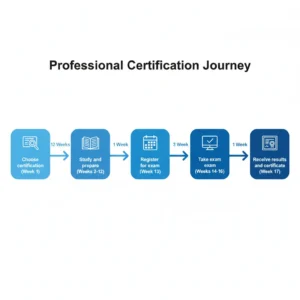
Follow this timeline for successful certification achievement:
Certification Study Strategies
Passing certification exams requires focused preparation.
Most certification exams have 60 to 80 percent pass rates on first attempts. Improve your odds with strategic study.
Create a study schedule spreading preparation over 8 to 16 weeks. Cramming does not work for comprehensive certification exams.
Use official study guides and materials from the certifying body. These align most closely with exam content.
Take multiple practice exams under timed conditions. Aim to score 85 percent or higher consistently before scheduling your real exam.
Join study groups online through Reddit, Facebook groups, or Discord servers. Other test-takers share resources and tips.
Focus heavily on your weak areas. Do not waste time reviewing topics you already know well.
Schedule your exam date 2 to 3 weeks before you feel completely ready. Having a deadline forces focused study and prevents endless preparation.
If you fail, immediately schedule a retake. Do not wait months to try again. Review what you missed while the exam is fresh in memory.
Maintaining Your Certification
Many certifications expire without renewal.
PMP requires 60 professional development units every 3 years. CPA requires 40 to 120 hours of continuing education annually, depending on the state. Many IT certifications require renewal every 2 to 3 years. Medical and nursing certifications require continuing education and periodic renewal.
Budget time and money for maintaining certifications. A lapsed certification wastes your initial investment and removes credentials from your resume. Add certifications to your ATS-optimized resume in a dedicated section.
Some professionals let less valuable certifications lapse to focus on maintaining critical credentials. Prioritize renewals based on which certifications deliver the most career value. Showcase certification projects in your professional portfolio.
Track renewal deadlines in a calendar. Set reminders 6 months before expiration to complete continuing education requirements.
Frequently Asked Questions (FAQs)
Q: Should I get certifications or a graduate degree?
Depends on your field and goals. Technical fields often value certifications more. Management and executive roles favor graduate degrees. Many professionals pursue both over their careers. Certifications cost less and take less time than degrees.
Q: How many certifications should I have?
Quality beats quantity. Two to three highly relevant certifications surpass ten random credentials. Focus on industry-standard certifications in your field.
Q: Do certifications matter if I have experience?
Yes, especially for career transitions or advancement. Certifications validate that experience through a third-party assessment. Many roles require both experience and certifications.
Q: Should I list all certifications on my resume?
List only relevant certifications. If you have ten certifications, include the three to five most applicable to the role you are seeking. Irrelevant certifications clutter your resume.
Q: Can I put certifications I am working toward on my resume?
Yes, if close to completion. Write In Progress with expected completion date. Example: CFA Level 1 Candidate (Exam scheduled June 2026). Do not list certifications you have barely started.
Q: Are expensive certifications worth it?
If they are industry standards in your field, yes. CPA, CFA, PMP, and major cloud certifications justify their costs through salary increases and career opportunities. Research before investing in expensive credentials.
Professional certifications deliver measurable career returns through higher salaries, faster promotions, and expanded opportunities. The key is choosing certifications strategically aligned with your career goals and industry demands.
Identify one or two certifications from this guide that match your career path. Research their requirements. Create a study timeline. Schedule your exam.
That investment of 50 to 200 study hours and a few hundred to a few thousand dollars returns tens of thousands in increased lifetime earnings.
Start today. The certifications you earn this year will benefit your career for decades.
For more career advancement strategies, explore our professional development courses guide, career transition resources, and skill-building recommendations.