
Carbon Offset Guide: How to Choose Quality Projects 2026
A carbon offset is a verified reduction or removal of one metric ton of carbon dioxide (or equivalent greenhouse gases) achieved through projects such as renewable energy, reforestation, or carbon removal, used to compensate for emissions that cannot be eliminated directly.
You’ve taken the first crucial step: you’ve calculated your carbon footprint. You’ve reduced what you can, switched to renewable energy, eaten less meat, and driven less. But some emissions remain unavoidable: that essential flight to visit an ailing family, your home’s heating in a harsh winter, or the embedded emissions in your laptop. Learn how to reduce home energy emissions by 70 percent.
Calculate how many offsets you need based on your actual footprint.
This is where carbon offsets enter the picture. Airlines, event organizers, and even eco-conscious individuals promote them as a way to “neutralize” your emissions by funding environmental projects elsewhere. But are they a genuine climate solution or just a feel-good Band-Aid?
Let’s cut through the marketing and explore what carbon offsets really are, how to evaluate them, and when (if ever) they make sense in your sustainability journey.
🔍 What Is a Carbon Offset?
A carbon offset represents the reduction or removal of one metric ton of CO₂ (or its equivalent in other greenhouse gases) from the atmosphere through a verified project. When you purchase an offset, you’re funding initiatives like
- Reforestation & Forest Conservation: Trees absorb CO₂ as they grow.
- Renewable Energy Projects: Wind or solar farms in developing countries that displace fossil fuels.
- Methane Capture: At landfills or dairy farms, preventing potent methane from entering the atmosphere.
- Clean Cookstoves: Replacing open-fire cooking in low-income regions, reducing deforestation and emissions.
- Direct Air Capture (DAC): Emerging tech that pulls CO₂ directly from the air and stores it underground.
In theory, if your flight emits 2 tons of CO₂, buying 2 tons of offsets “cancels” that impact. Understanding your carbon footprint.
Table of content
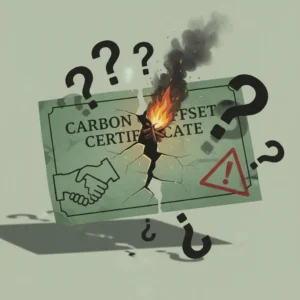
⚠️ The Big Caveats: Why Offsets Are Controversial
Carbon offsets face four major problems from scientists, activists, and watchdogs:
1. Additionality Problem
Did the project only happen because of offset funding? If a wind farm was already profitable or a forest was going to be protected anyway, the offset didn’t create new emission reductions.
2. Permanence Risk
Trees can burn in wildfires, be cut down, or die from disease releasing stored carbon back into the air. How is that risk accounted for?
3. Verification & Transparency Gaps
Quality varies dramatically across offset providers. Some use outdated methodologies or lack third-party auditing. The market is rife with low-quality or even fraudulent credits.
4. Moral Hazard
Offsets can enable continued high-emission lifestyles (“I’ll just offset my jet-setting”) instead of driving the deep emissions reductions we urgently need.
5. Distraction from Systemic Change
Over-reliance on offsets lets corporations and governments delay phasing out fossil fuels, the root cause of the crisis. Companies should integrate offsets into comprehensive carbon reporting.
How Much Do Carbon Offsets Cost
Carbon offset prices vary widely based on project type, verification standard, and co-benefits.
Typical cost ranges per ton of CO₂e:
- Renewable energy projects: $3 to $10 per ton
- Methane capture: $5 to $15 per ton
- Reforestation: $10 to $30 per ton
- Direct air capture: $100 to $600 per ton
- Low prices often signal weak verification or non-additional projects. Quality offsets from Gold Standard or Verified Carbon Standard typically cost $15 to $50 per ton.
- Budget for your offset needs. The average American produces 16 tons of CO₂e yearly. Offsetting unavoidable emissions (2 to 3 tons after reduction) costs $30 to $150 annually.
- Direct air capture costs more but offers permanent removal. Forest offsets cost less but face permanence risks.
- Compare prices across platforms. Check what percentage goes to the project versus administrative overhead. Transparent providers show this breakdown clearly.
- Your offset budget depends on your footprint. Calculate your emissions first to know what you need.
🌍 The Golden Rule:
Reduce first, offset last, and only for truly unavoidable emissions. Focus on proven reduction strategies before considering offsets.
✅ How to Choose a High-Quality Carbon Offset Program
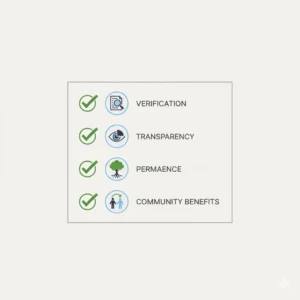
If you decide to offset (e.g., for an essential flight), not all programs are created equal. Look for these hallmarks of integrity:
- Third-Party Certification: Reputable standards include:
- Gold Standard (goldstandard.org) focuses on community benefits and SDGs.
- Verified Carbon Standard (VCS) by Verra (verra.org) Most widely used, but scrutinized recently.
- Climate Action Reserve (climateactionreserve.org) U.S.-focused, rigorous.
- Transparency: Clear project descriptions, location, monitoring data, and proof of additionality.
- Permanence Safeguards: For forestry projects, look for buffer pools (extra credits set aside to cover losses).
- Co-Benefits: Projects that also support biodiversity, clean water, or local livelihoods (e.g., clean cookstoves improving women’s health).
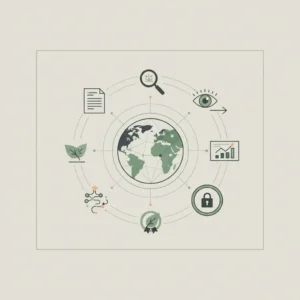
🔗 Trusted Offset Platforms (as of 2025):
MyClimate Swiss-based, strong on education and high-quality projects.
Atmosfair Specializes in aviation; uses realistic multipliers for non-CO₂ effects at altitude.
NativeEnergy U.S.-focused, supports community-led projects.
Puro.earth For carbon removal (not just avoidance), like biochar and DAC higher cost, higher integrity.
❌ Avoid:
- Offsets bundled automatically by airlines without transparency
- Programs that don’t name specific projects
- Prices that seem too good to be true (quality offsets typically cost $15 to $50 per ton for verified projects)
Carbon Offset Verification Standards Explained
Verification standards ensure offset projects deliver real emission reductions. Four major standards dominate the market.
Gold Standard focuses on sustainable development co-benefits. Projects must improve local communities while reducing emissions. Higher cost but strong integrity.
The Verified Carbon Standard (VCS) by Verra is the most widely used. Over 1,800 registered projects. Recently faced scrutiny over rainforest offset quality. Check individual project ratings and EPA guidance on carbon offsets.
Climate Action Reserve specializes in North American projects. Rigorous protocols for specific project types. Strong focus on additionality and permanence.
American Carbon Registry was the first voluntary offset registry. Conservative accounting methods. Good for US-based projects.
Look for projects with multiple certifications. This signals higher quality and independent verification from different auditors.
Avoid projects with no third-party certification. Self-certified offsets lack independent oversight and credible accounting.
🌱 A Better Approach: Prioritize Reduction + Removal (Not Just Avoidance)
The most credible climate strategy follows this hierarchy:
1. Avoid emissions (don’t take the flight if possible).
2. Reduce what you can’t avoid (take the train instead).
3. Replace with clean alternatives (EV, renewable energy).
4. Remove residual emissions using carbon removal credits (not just avoidance).
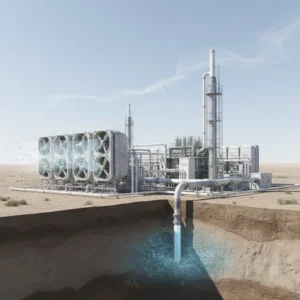 Carbon removal, like direct air capture or enhanced mineralization, physically extracts CO₂ from the air and stores it long-term. It’s more expensive but far more durable than forest offsets.
Understand the difference between net zero and carbon neutral goals.
Platforms like CarbonPlan provide independent analysis of removal projects, while Puro.earth certifies durable removal methods.
💡 Practical Tips: When (and How) to Use Offsets Wisely
Only offset what’s truly unavoidable: essential medical travel, not vacation flights.
Use offsets as a last resort, after aggressive reduction.
Combine with advocacy: Offset your flight and write to your airline demanding fleet electrification or sustainable aviation fuel.
Track your total footprint: Use OpinoHive to see your baseline and reductions, and only then consider offsetting the remainder. Use our tracking guide to monitor offset purchases over time.
Budget for it: Set aside $20–$50/year for high-quality offsets if needed treat it like a climate responsibility fee.
Calculate your flight emissions with our transportation calculator.
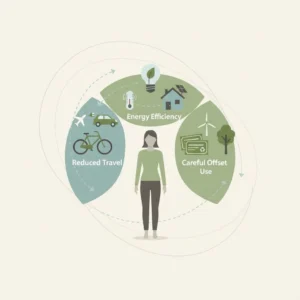
Offsets Are a Tool, Not a Solution
Carbon offset programs can play a limited, temporary role in climate action but they are not a substitute for slashing emissions at the source. The priority must always be systemic decarbonization: clean energy grids, electrified transport, circular economies, and regenerative agriculture.
As an individual, your power lies first in reducing your footprint, then in demanding corporate and policy change. Offsets, if used at all, should be a small, thoughtful footnote not the headline of your climate story.
🌿 Remember: The best offset is the one you never needed to buy.
How to choose carbon offsets
1. How to choose a high-quality carbon offset:
2. Verify third-party certification
3. Confirm the project’s additionality
4. Assess permanence and risk buffers
5. Prefer carbon removal over avoidance
6. Avoid unrealistically cheap credits
Frequently Asked Questions (FAQs)
Q: Are carbon offsets worth it?
Carbon offsets are only worth using for unavoidable emissions and only when they meet strict quality criteria; they are not a substitute for reducing fossil fuel use at the source.
Q: How to choose carbon offsets?
Verify third-party certification, confirm the project’s additionality, assess permanence and risk buffers, prefer carbon removal over avoidance, and avoid unrealistically cheap credits.
Q: Are carbon offsets worth it?
Carbon offsets are only worth using for unavoidable emissions and only when they meet strict quality criteria; they are not a substitute for reducing fossil fuel use at the source.
Ready to take control of your climate impact?
Start by measuring your true footprint without offsets with the free, science-based,
Know your number. Reduce what you can. And if you offset, do it wisely.
Because the goal isn’t carbon neutrality through accounting tricks.It’s a livable planet through real action.
Disclaimer:
Climate calculations and offset estimates are approximations based on publicly available data and recognized methodologies. They are intended for educational purposes and should not be treated as precise measurements. Read our full climate data disclaimer for details on accuracy and responsibility.