

Climate Resources Guide | Tools to Track Your Carbon Footprint
Climate urgency demands individual action. Headlines warn of record-breaking heatwaves, intensifying storms, vanishing ice caps, and ecosystems pushed to the brink. Yet, amid the noise, many of us feel stranded we lack the tools to act effectively to act meaningfully. We know our choices matter, but how do we translate that awareness into real impact? The answer begins with understanding one key metric: your carbon footprint. And to understand it, you need climate resources credible, accessible, and actionable tools that turn anxiety into agency.
This is about empowerment through knowledge. It’s about empowerment through knowledge. In this guide, we’ll explore the essential climate resources that help you measure, analyze, and strategically reduce your carbon footprint. From trusted carbon calculators and data dashboards to educational platforms and community initiatives, these tools form the backbone of informed climate action. Whether you’re a curious beginner or a sustainability veteran, these resources will help you navigate your personal climate journey with clarity and confidence.
Your Complete Carbon Footprint Toolkit
Calculate Your Footprint
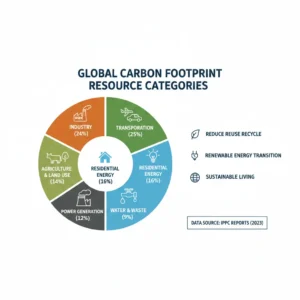
Start your climate journey by measuring your baseline emissions. Our free carbon footprint calculator shows your impact from transportation, home energy, food, and consumption.
You get immediate results with personalized reduction recommendations. The calculator takes 15 minutes and requires no sign-up.
Understanding your number is the first step. You identify your biggest emission sources. You prioritize where to focus your efforts.
Learn Carbon Footprint Basics
New to carbon footprints? Start with the fundamentals.
Our carbon footprint definition guide explains what emissions are, how they’re measured, and why your individual impact matters. You learn the difference between Scope 1, 2, and 3 emissions.
We break down complex climate science into clear, actionable knowledge. No jargon, no overwhelming data, just practical understanding.
Reduce Your Emissions
Measurement alone does not create change. You need proven strategies to cut your footprint.
Our reduction guide covers 15 high impact actions across transportation, home energy, food, and consumption. Each tip includes exact CO2 savings and implementation steps.
You learn which changes deliver the biggest results. Eliminating one flight saves 2 tons yearly. Switching to renewable energy saves 3 tons. Reducing red meat saves 1 ton.
Focus on high impact actions first. Small changes add up, but major shifts accelerate progress.
Choose Low Carbon Products
Products account for 20 percent of your footprint. Manufacturing, shipping, and disposal create hidden emissions.
Our product guide recommends 25 low carbon alternatives for home, kitchen, personal care, and transportation. Each product includes emissions savings and cost information.
Durable products beat disposables. Refurbished electronics save 75 percent of manufacturing emissions. Natural materials produce less CO2 than synthetics.
Track Your Progress
Consistent tracking drives sustained reduction. Monthly measurement shows whether your actions work.
Our tracking guide explains three methods: monthly calculator updates, spreadsheet tracking, and carbon apps. You choose the approach matching your detail preference.
Tracking reveals patterns you miss otherwise. Summer spikes from air conditioning. Winter increases due to heating. Understanding these patterns helps you target reductions effectively.
People who track reduce footprints 25 to 35 percent in year one versus 5 to 10 percent for one-time calculators.
Understand Offsetting
After maximizing reduction, some emissions remain unavoidable. Carbon offsets fund projects reducing emissions elsewhere.
Our offset guide explains when offsets make sense, how to choose quality projects, and which verification standards matter. You avoid greenwashing and ensure your money funds real climate action.
Remember: reduce first, offset last.
Set Long Term Goals
Individual action needs systemic context. Understanding net zero versus carbon neutral helps you align personal goals with global climate targets.
Our comparison guide explains the difference, shows what each requires, and helps you set realistic timelines for deep decarbonization.
What Are Climate Resources and Why Do They Matter?
Climate resources are any tools, platforms, datasets, organizations, or educational materials designed to help individuals, communities, and businesses understand climate change and take effective action. They range from scientific databases and policy trackers to mobile apps and neighborhood composting programs.
Crucially, the most impactful personal climate resource is the one that connects global science to your daily life—and that’s where the carbon footprint comes in. Your footprint is the bridge between planetary-scale emissions and your morning coffee, commute, or weekend getaway. Climate resources make that connection visible, measurable, and manageable.
Without these tools, climate action remains abstract. With them, you gain:
- Awareness of your contribution to the problem
- Clarity on where your biggest impacts lie
- Strategies tailored to your lifestyle
- Motivation through measurable progress
- Connection to a larger movement
Let’s dive into the key categories of climate resources that empower footprint reduction.
1. Carbon Footprint Calculators: Your Personal Climate Dashboard
As explored in our earlier piece, a carbon footprint calculator is the foundational climate resource for individuals. But not all calculators are equally robust. Here are standout options and what makes them valuable:
a) Global & Government-Backed Tools
- EPA Carbon Footprint Calculator (USA)
Simple, authoritative, and focused on home energy, transportation, and waste. Ideal for U.S. residents seeking a quick, reliable baseline.
Why it’s useful: Uses official U.S. emissions data, integrates with ENERGY STAR recommendations, and avoids commercial bias.
- UK Carbon Trust Footprint Calculator
Backed by one of the world’s leading climate NGOs, this tool offers detailed breakdowns and business-focused options alongside personal tracking.
Why it’s useful: Transparent methodology, aligned with international standards (GHG Protocol), and includes scenario modeling.
b) Academic & Non-Profit Platforms
- CoolClimate Network (UC Berkeley)
One of the most scientifically rigorous free tools. It factors in income, location, diet, and consumption patterns with remarkable granularity.
Why it’s useful: Developed by climate scientists; shows how your footprint compares to people in similar demographics. Great for data-savvy users. - WWF Footprint Calculator
Visually engaging and globally accessible. It links carbon footprint to broader “ecological footprint” concepts, including land and water use.
Why it’s useful: Excellent for beginners; emphasizes biodiversity and resource limits alongside emissions.
c) Emerging & User-Friendly Web Tools
- OpinoHive Carbon Footprint Calculator
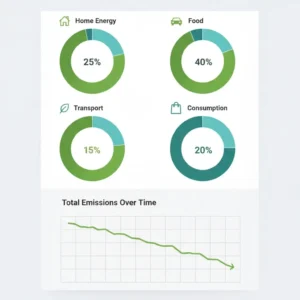
A sleek, intuitive web tool designed for everyday users who want fast, personalized insights without technical overload. It covers core categories: home energy, transport, diet, and consumption, and delivers clear visual breakdowns alongside practical, step-by-step reduction tips.
Why it’s useful: Built with usability in mind, it’s perfect for those new to carbon accounting or looking for a quick annual check-in. The interface is clean, mobile-friendly, and free to use, making climate literacy more accessible.
🔗 Try it here:
d) Specialized Calculators
- Atmosfair (for Air Travel)
While general calculators include flights, Atmosfair dives deep into aviation emissions, accounting for radiative forcing (non-CO₂ impacts at altitude), often ignored elsewhere.
Why it’s useful: Most accurate for frequent flyers; transparent about offsetting (though reduction is always preferred).
Foodprint (by GRACE Communications Foundation)
Focuses exclusively on the climate (and water) impact of food choices. Shows emissions for hundreds of foods, from lentils to lamb.
Tip: Use multiple calculators for a fuller picture. Each has different assumptions. The goal isn’t perfection, it’s directional insight.
2. Educational Platforms: Building Climate Literacy
Understanding why your footprint matters requires context. These resources translate complex climate science into digestible knowledge:
- Project Drawdown
Not just a book—a living research hub ranking 100+ solutions to reverse global warming, from regenerative agriculture to refrigerant management. Each solution includes cost, savings, and implementation pathways.
Relevance to footprint: Helps you see how personal actions (e.g., reducing food waste) fit into systemic solutions. - Our World in Data Climate Change Section
Free, open-access visualizations of global emissions trends, country comparisons, and sector breakdowns (energy, transport, industry).
Relevance: Shows that while individual action matters, systemic change (e.g., clean grids) dramatically lowers everyone’s footprint. Empowers advocacy. - Climate Reality Project’s Learning Hub
Founded by Al Gore, this offers free courses, webinars, and fact sheets on climate science, justice, and solutions.
Relevance: Connects personal footprint to climate justice—e.g., how the Global North’s high footprints disproportionately impact vulnerable nations. - NASA Climate Change: Vital Signs of the Planet
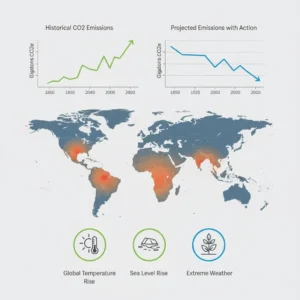
Real-time data on CO₂ levels, global temperature, ice sheet loss, and sea level rise.
Relevance: Grounds your personal journey in planetary reality. When your calculator says “15 tons CO₂e,” NASA shows what that contributes to globally.

3. Tracking & Action Apps: From Insight to Habit
Knowing your footprint is step one. Sustaining change requires habit-building. These apps help:
- JouleBug / Oroeco
Turn sustainability into a game. Track actions (e.g., biking to work, meatless meals), see CO₂ saved, and earn rewards. Syncs with utility bills or smart meters.
Footprint link: Makes reduction tangible and social, seeing your weekly “CO₂ saved” builds momentum. - Ecosia (Search Engine)
Plant trees with ad revenue. While not a direct footprint tracker, it offsets a tiny fraction of digital emissions and funds reforestation, a natural carbon sink.
Note: Digital footprint is real! Streaming, cloud storage, and data centers emit CO₂. Conscious tech use matters. - Good On You
Rates fashion brands on environmental impact, labor practices, and animal welfare.
Footprint link: Fast fashion is a massive emitter (10% of global CO₂). This app helps you reduce consumption with the most effective footprint strategy.
4. Community & Advocacy Resources: Amplifying Your Impact
Individual action, while vital, isn’t enough. These resources help you leverage your footprint awareness for collective change:
- Citizens’ Climate Lobby (CCL)
Trains volunteers to lobby for carbon fee-and-dividend policies.
Why it matters: A national carbon price would make low-carbon choices (EVs, plant-based diets) the economically rational default, shrinking everyone’s footprint at scale. - 350.org
Global grassroots movement fighting fossil fuel projects and promoting renewable energy.
Footprint link: Your calculator might show your car emits 4 tons/year, but stopping a new oil pipeline prevents millions of tons. Systemic action multiplies impact. - Local Sustainability Co-ops & Repair Cafés
Found in many cities, these community hubs promote sharing, repairing, and reusing, directly reducing consumption-based emissions.
Tip: Search “repair café near me” or “tool library [your city].”
5. Corporate & Financial Transparency Tools

Your footprint isn’t just about what you burn; it’s also about what your money funds:
- Doconomy
A banking app that tracks the CO₂ impact of your purchases using real-time emissions data. Shows the footprint of buying a t-shirt vs. a train ticket.
Relevance: Makes invisible supply chain emissions visible. - As You Sow’s Invest Your Values
Analyzes mutual funds and retirement accounts for fossil fuel exposure, deforestation risk, and clean energy alignment.
Footprint link: If your pension is invested in coal, you’re indirectly funding emissions far beyond your lifestyle. Divesting shifts capital toward solutions.

Your Climate Resource Action Plan
Ready to engage? Here’s how to start:
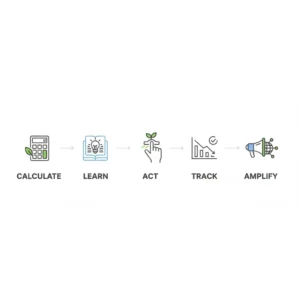
- Calculate: Spend 15 minutes on a trusted tool like the OpinoHive Carbon Footprint Calculator or the EPA’s version. Save your baseline.
- Learn: Spend 10 minutes on Our World in Data—see where global emissions come from.
- Act: Pick one high-impact action from your results (e.g., switch to green energy, cut beef).
- Track: Use an app like Oroeco to monitor your progress monthly.
- Amplify: Join a local CCL chapter or sign a petition for clean energy policy.
Resources Are Useless Without Use
Climate resources only work when you use them. Your carbon footprint isn’t a life sentence; it’s a starting point. And with the right tools, every choice becomes a vote for the future you want.
This December, as the year closes, don’t just reflect, act. Measure your footprint. Learn from the data. Join a community. Demand better. The planet doesn’t need perfect citizens; it needs millions of informed, engaged people using the best resources available to lighten their load, together.
Your climate journey starts with a single click. Which resource will you try first?
The information provided here is for educational purposes only and does not constitute professional, legal, or financial advice. For more details, please read our Disclaimer page.